
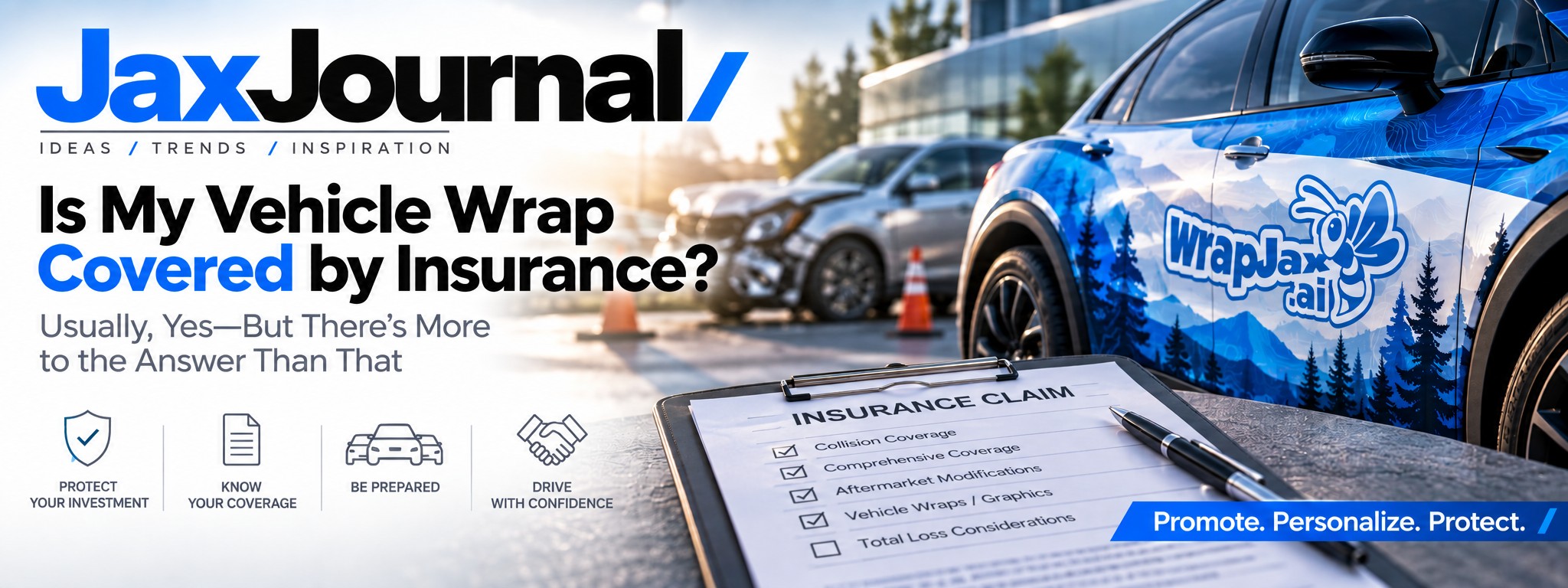
Usually, Yes—But There’s More to the Answer Than That. It's a question we hear surprisingly often from customers, usually right around the time they're deciding whether to invest in…
Usually, Yes—But There’s More to the Answer Than That
It's a question we hear surprisingly often from customers, usually right around the time they're deciding whether to invest in wrapping their vehicle:
"If I get into an accident, will my insurance cover the wrap?"
The short answer is often, yes.
The more accurate answer is: it depends on your insurance policy, the circumstances surrounding the damage and whether your insurance company knows about the modifications you've made to the vehicle.
We aren't insurance agents, and we certainly can't tell you what your individual policy covers. But after working with wrapped vehicles for many years, we can explain some of the situations you're likely to encounter and, more importantly, a few things worth discussing with your insurance company before you ever need to file a claim.
First, Understand That the Wrap Has Value
A professionally installed vehicle wrap isn't a $100 accessory.
Depending on the vehicle and type of project, someone may have invested several thousand dollars in a color-change wrap, custom printed graphics or specialty film. Colored Paint Protection Film (PPF) can represent an even larger investment.
Commercial vehicles present another consideration because the graphics may be an integral part of the business's branding. If a wrapped work truck gets damaged and needs a new door, replacing the door isn't necessarily enough. That door also needs graphics that match the rest of the vehicle.
The question, therefore, isn't simply whether the insurance company will repair the damaged vehicle.
It's whether the policy also provides coverage for restoring the vehicle's wrap or graphics to their pre-loss condition.
Quite often it can.
But don't assume.
What Happens When Only One Part of a Wrapped Vehicle Is Damaged?
Let's imagine someone backs into the driver's side of your wrapped vehicle in a parking lot and damages the front fender and driver's door.
The body shop may need to remove the wrap from those panels before repairs can be completed. Once the bodywork and paint are finished and have had sufficient time to cure, those areas may then need to be rewrapped.
In a relatively straightforward situation, the wrap portion of the repair may become part of the overall insurance claim when the underlying accident is covered.
The insurance company or body shop may request an estimate from a wrap company showing the cost to remove and replace the affected material. That's something a professional wrap shop should be able to provide.
There can, however, be another complication.
Matching an Existing Wrap Isn't Always as Simple as Ordering More Material
This is something an insurance adjuster—or even the vehicle owner—may not initially consider.
Wrap films change over time.
A vehicle that has spent several years outside has been exposed to UV, weather, washing and environmental conditions. Even if we can purchase the exact same manufacturer's color and product number that was originally installed, brand-new material may not perfectly match material that has been on the vehicle for several years.
Some colors and finishes make this more noticeable than others.
Printed commercial graphics present a similar challenge. If the original graphics were produced years ago, matching them may require access to the original artwork, colors and production information. Even then, surrounding graphics have been exposed to the environment while the replacement panel hasn't.
This is why repairing one damaged panel can occasionally become a larger conversation about what is required to reasonably restore the appearance of the vehicle.
What About a Total Loss?
This is where things can become considerably more policy-specific.
If the vehicle is declared a total loss, don't automatically assume that the insurance company's valuation of the vehicle includes the full amount you recently spent wrapping it.
Insurance companies may treat aftermarket modifications and accessories differently depending on the policy. There may be coverage limits, endorsements or requirements that modifications be declared in advance.
If you've invested a substantial amount in a full color-change wrap, custom graphics or colored PPF, this is an excellent question to ask your insurance agent before something happens.
Tell them what you've installed and approximately what it cost.
Then ask a very simple question:
"If this vehicle is damaged or totaled, how does my policy treat the wrap or PPF?"
That's a much better time to learn the answer than after an accident.
Comprehensive Coverage Can Be Different From Collision Coverage
Accidents aren't the only way wraps get damaged.
A falling tree branch, vandalism, theft, hail, fire or another non-collision event can potentially damage both the vehicle and the wrap covering it.
Whether that damage is covered depends on the type of insurance you carry and the specific cause of loss.
This is where customers sometimes hear that someone's wrap was covered by insurance and understandably assume theirs will be too.
Maybe.
But two people can own nearly identical wrapped vehicles and still have very different coverage because they purchased different policies.
That's why there really isn't a universal yes-or-no answer.
What If Someone Else Causes the Accident?
This can be another scenario entirely.
If another driver is responsible for damaging your vehicle, the claim may be handled through that driver's liability insurance rather than your own coverage, depending on the circumstances.
In that situation, the cost of restoring the vehicle to its pre-accident condition may include repairing or replacing damaged wrap material.
Again, every claim is different, and questions can arise about matching, depreciation, limits and what constitutes a reasonable repair.
The important thing is to make sure the wrap isn't forgotten when the initial repair estimate is prepared.
If the damaged panel was wrapped before the accident, make sure the adjuster and repair facility know that.